3. Executing
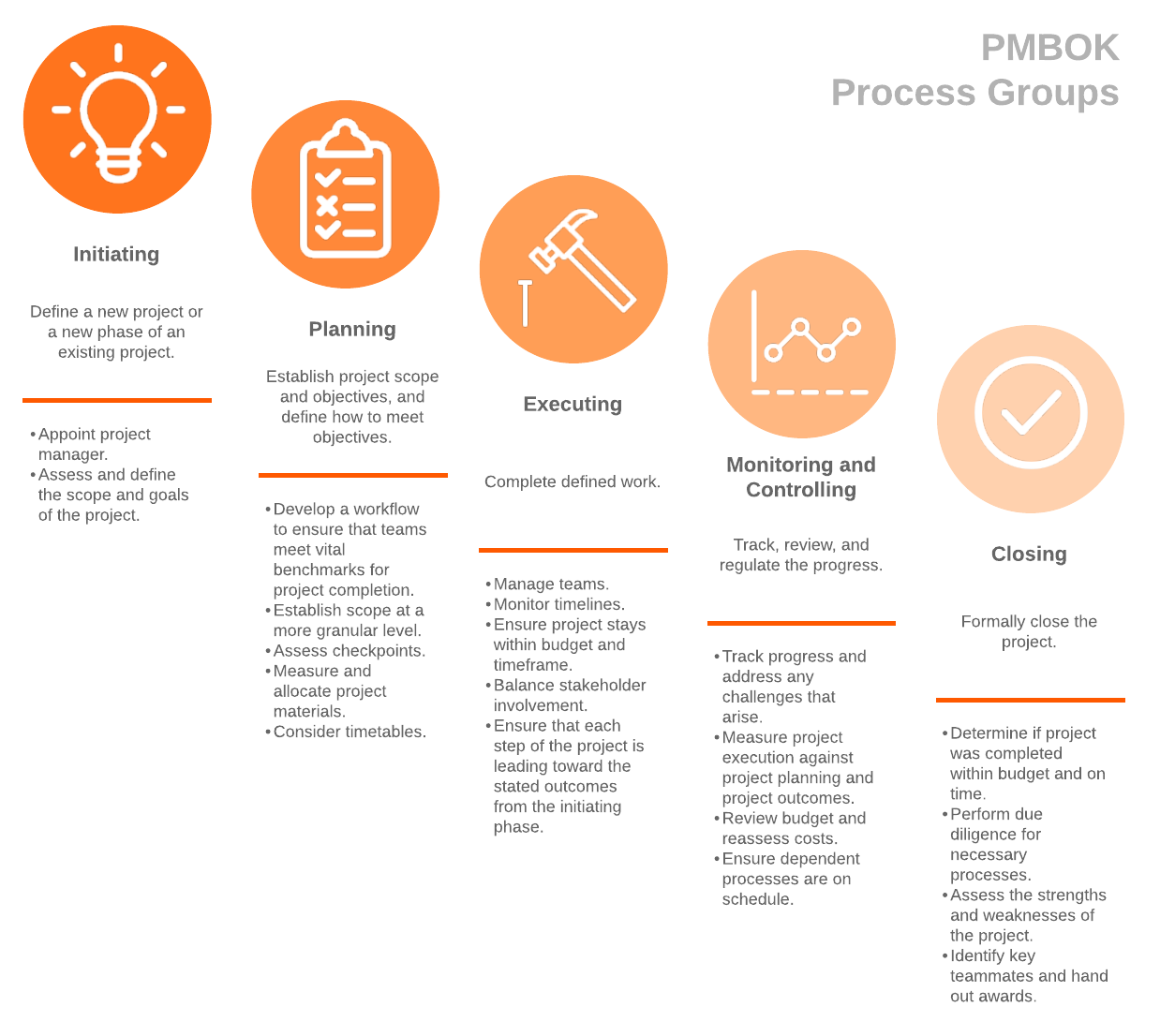
Most think of the executing phase as the most vital, when the truth is that execution, while important, is a crucial time and energy drain without the right planning. The project plan you’ve established in the last phase will guide you to project completion.
Execution involves managing teams, monitoring timelines, and staying within budget and timeframe. The best project managers also balance stakeholder involvement, ensuring that each step of the project is leading toward the stated outcomes from the initiating phase.
4. Monitoring and controlling
Once the project is moving, project managers have to track progress and address any challenges that arise to complete the project according to expectations. This phase revolves around metrics—acute analysis of project execution measured against project planning and project outcomes is the guiding focus. Considering budget, reassessing costs, and ensuring dependent processes are on schedule are all crucial parts of this phase.
Project processes are measured by KPIs (Key Performance Indicators), giving project managers key decision-making information on project deliverables and time, money, and energy expenditure and helping them determine if any workflows need to be updated.
5. Closing
At the close of a major project, the biggest considerations are whether the project was completed within budget and whether the project was completed on time. A successful project closing also involves the project manager performing due diligence to make sure all processes have ceased and aren’t wasting any additional resources, like canceling shipments of excess material or returning any rented equipment.
Another vital part of project closing mentioned in the PMBOK is assessing the strengths and weaknesses of the project: Which processes worked well? Which areas needed improvement, and how will they be optimized in the future?
The answers to these questions are essential to creating more effective workflows. The best project managers will take it a step further by identifying key teammates and even giving out awards for performance. This seemingly small step has huge payoffs: Everyone wants to feel valued for their hard work and contribution, and public recognition can be a valuable motivator for future teams.
Learn more about the common PMBOK project phases and see how your team can complete projects more efficiently.
PMBOK knowledge areas
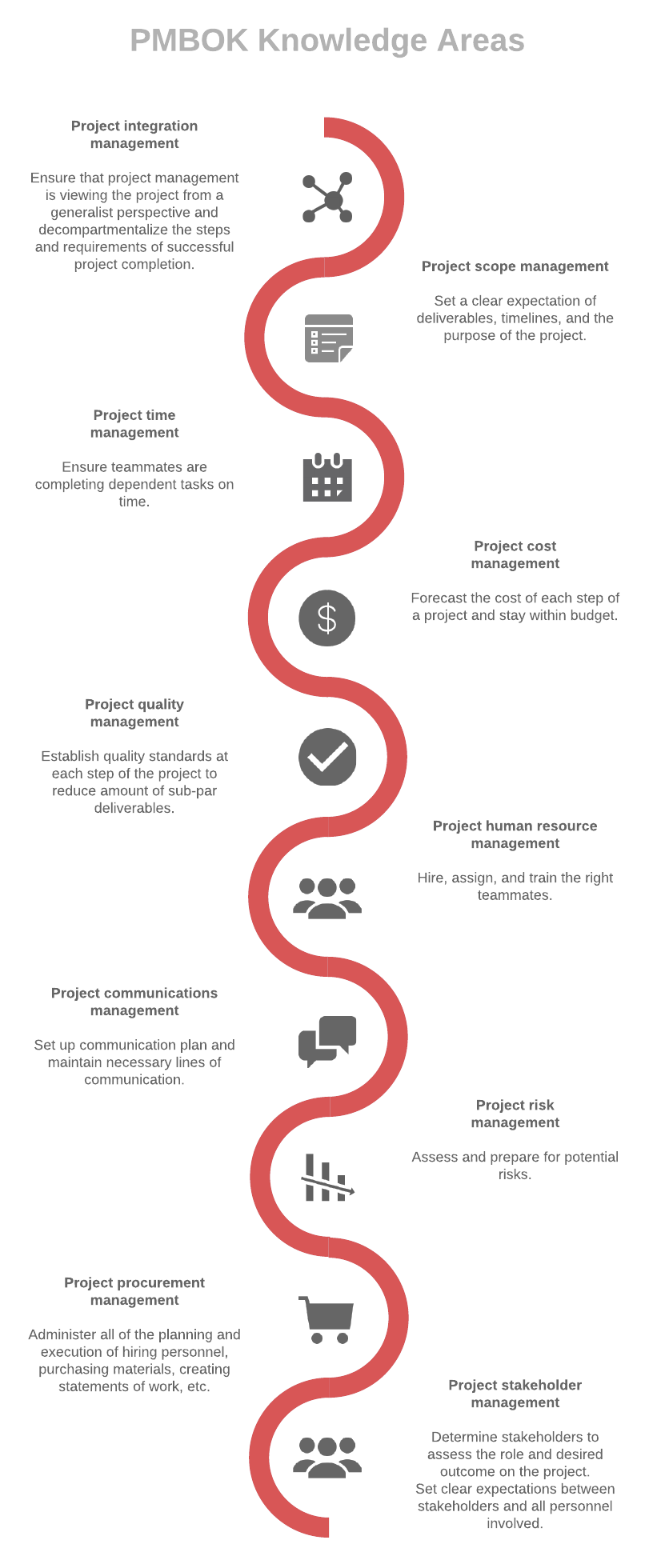
In addition to the five process groups, the PMBOK 6th edition organizes processes into ten knowledge areas:
1. Project integration management includes tasks that hold the whole project together, decompartmentalizing the steps and requirements of successful project completion.
2. Project scope management helps project managers define the work and deliverables that will be required to complete the project.
3. Project time management involves resource efficiency. Project managers must make sure that teammates are completing dependent tasks on time in order to keep the whole project on track.
4. Project cost management begins by forecasting the cost of each step of a project and even including budgeting for mishaps or compensating for any foreseeable obstacles. But the most important objective is staying within a stated budget.
5. Project quality management safeguards against subpar deliverables by establishing quality standards at each step of the project.
6. Project resource management can include hiring the right teammates, assigning the right teammates, and, in some cases, training teammates to perform new tasks.
7. Project communications management involves setting up a communications plan and maintaining the necessary lines of communication.
8. Project risk management involves assessing and preparing for potential risks and must be carried out through every step of the project, including when/if plans change mid-project.
9. Project procurement management means administering all of the planning and execution of hiring personnel, purchasing materials, creating statements of work with contractors, etc.
10. Project stakeholder management involves everything from determining stakeholders to assessing the role and desired outcome on the project and setting clear expectations between stakeholders and all personnel involved.
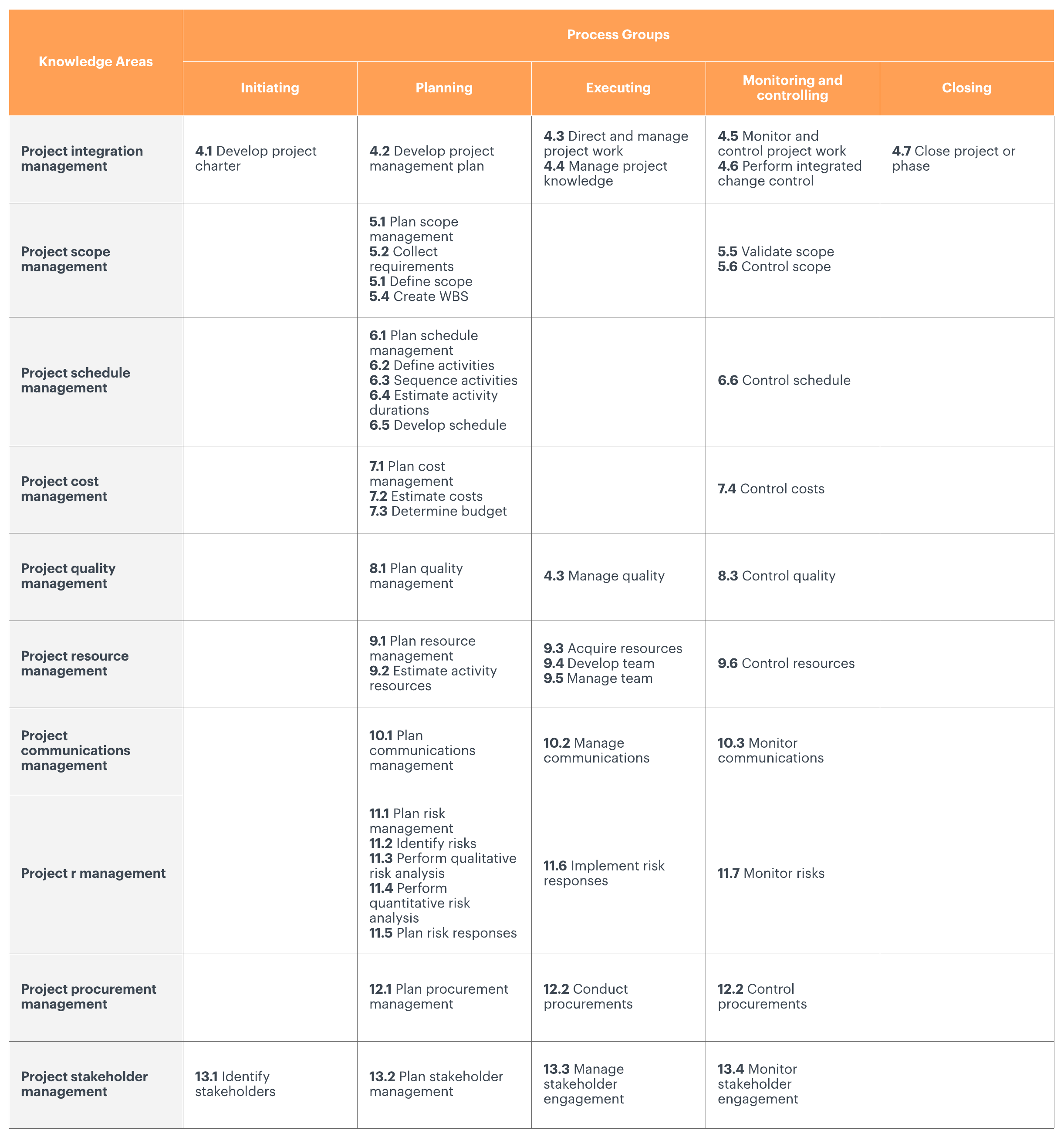
See the image below for a complete overview.