What is a balanced scorecard?
The balanced scorecard is a management system originally developed by Robert Kaplan and David Norton to help organizations achieve their business objectives and execute key strategies.
In the past, organizations tended to focus on primarily financial metrics and objectives to manage their business and develop strategies. While finances and revenue play an important role in the health and performance of any business, this focus gives an incomplete picture of success (or failure).
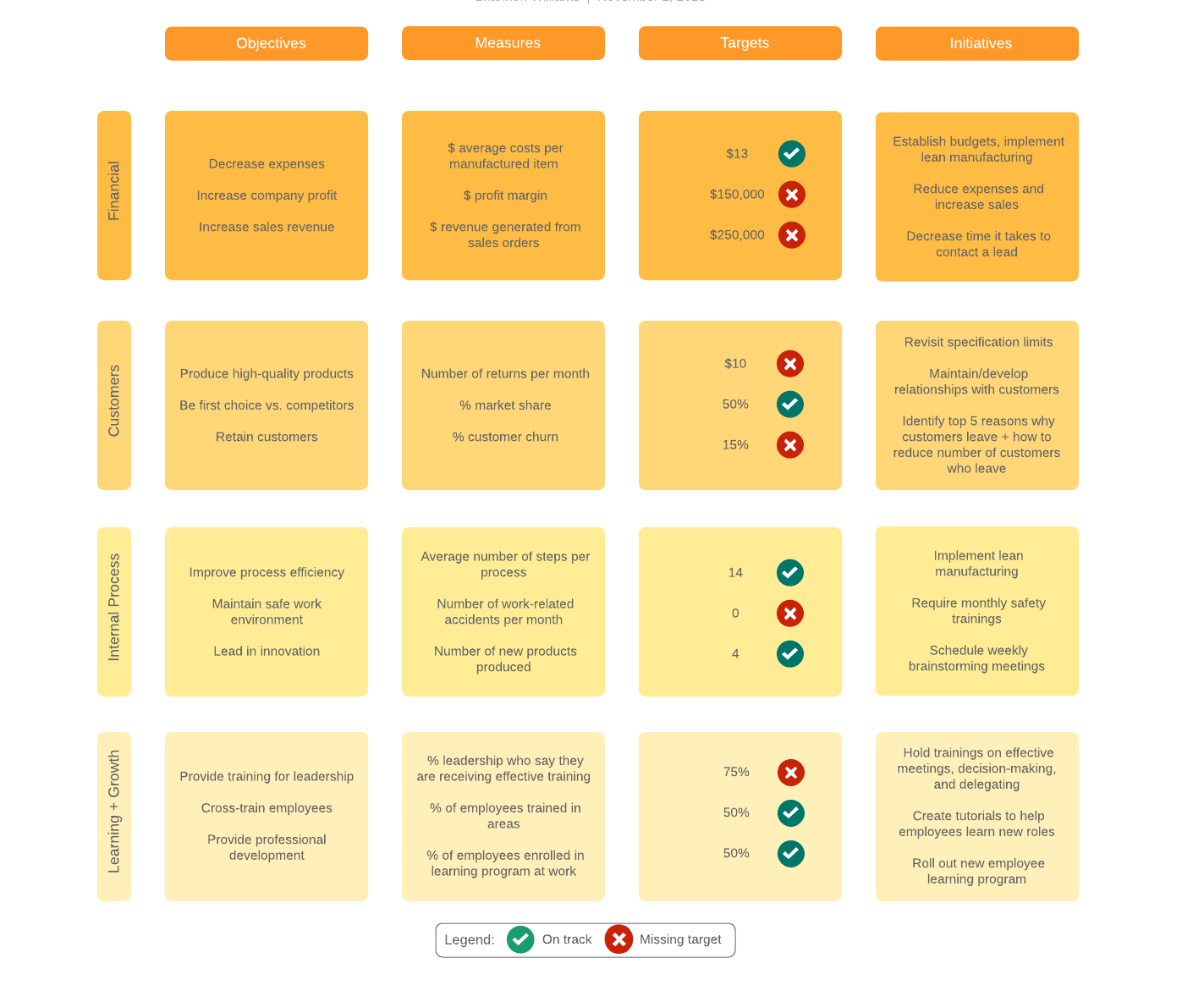
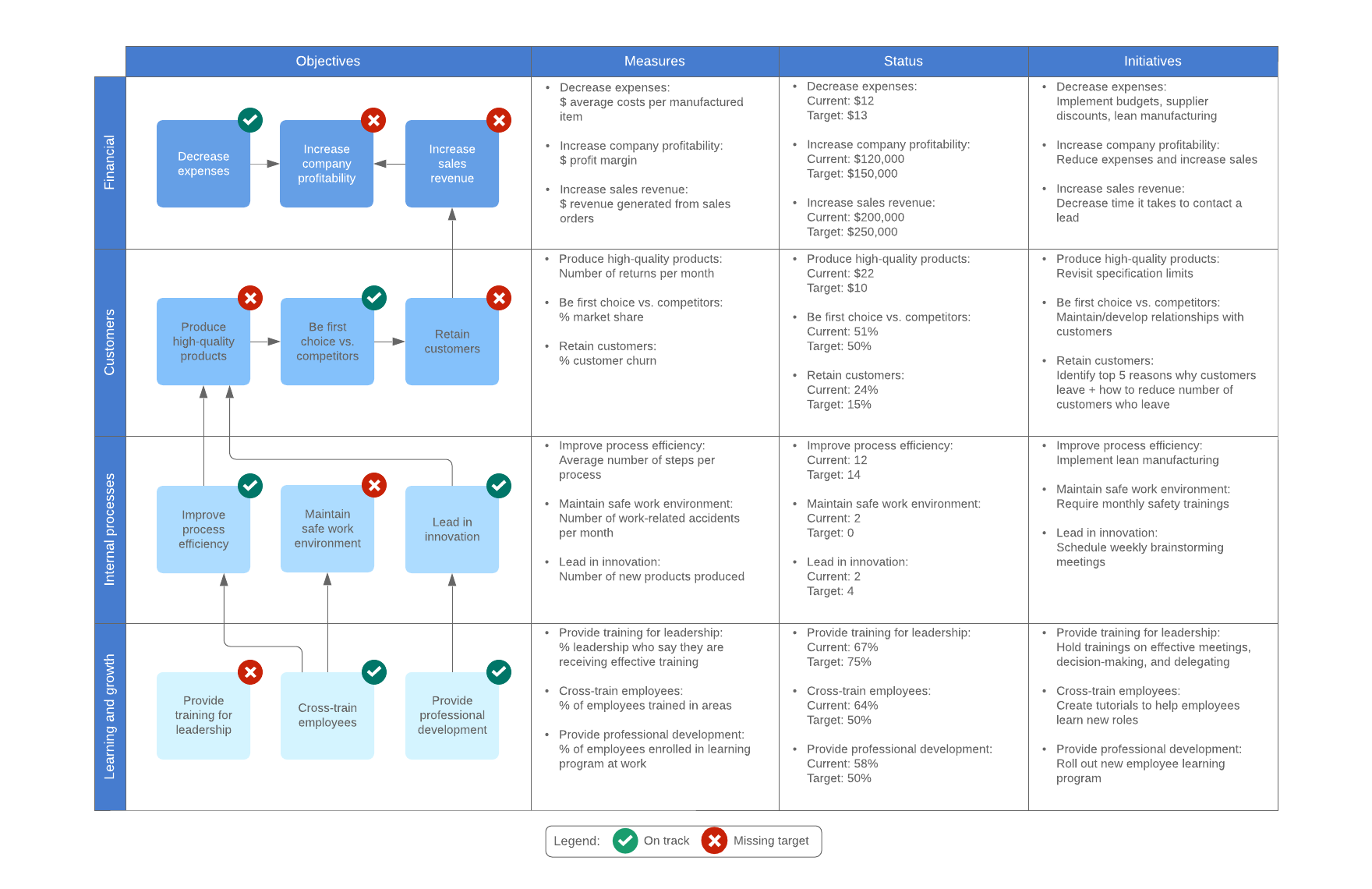
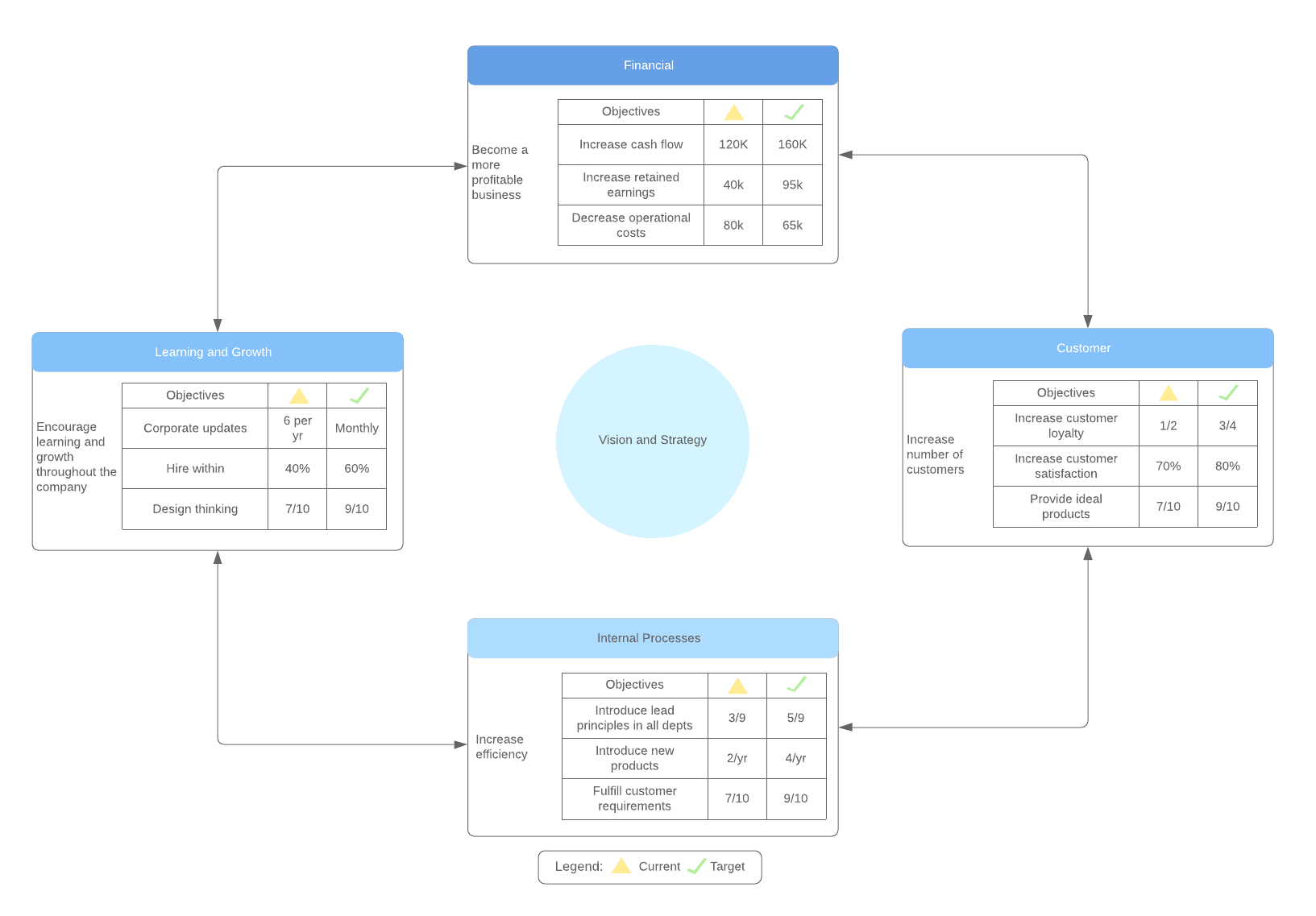
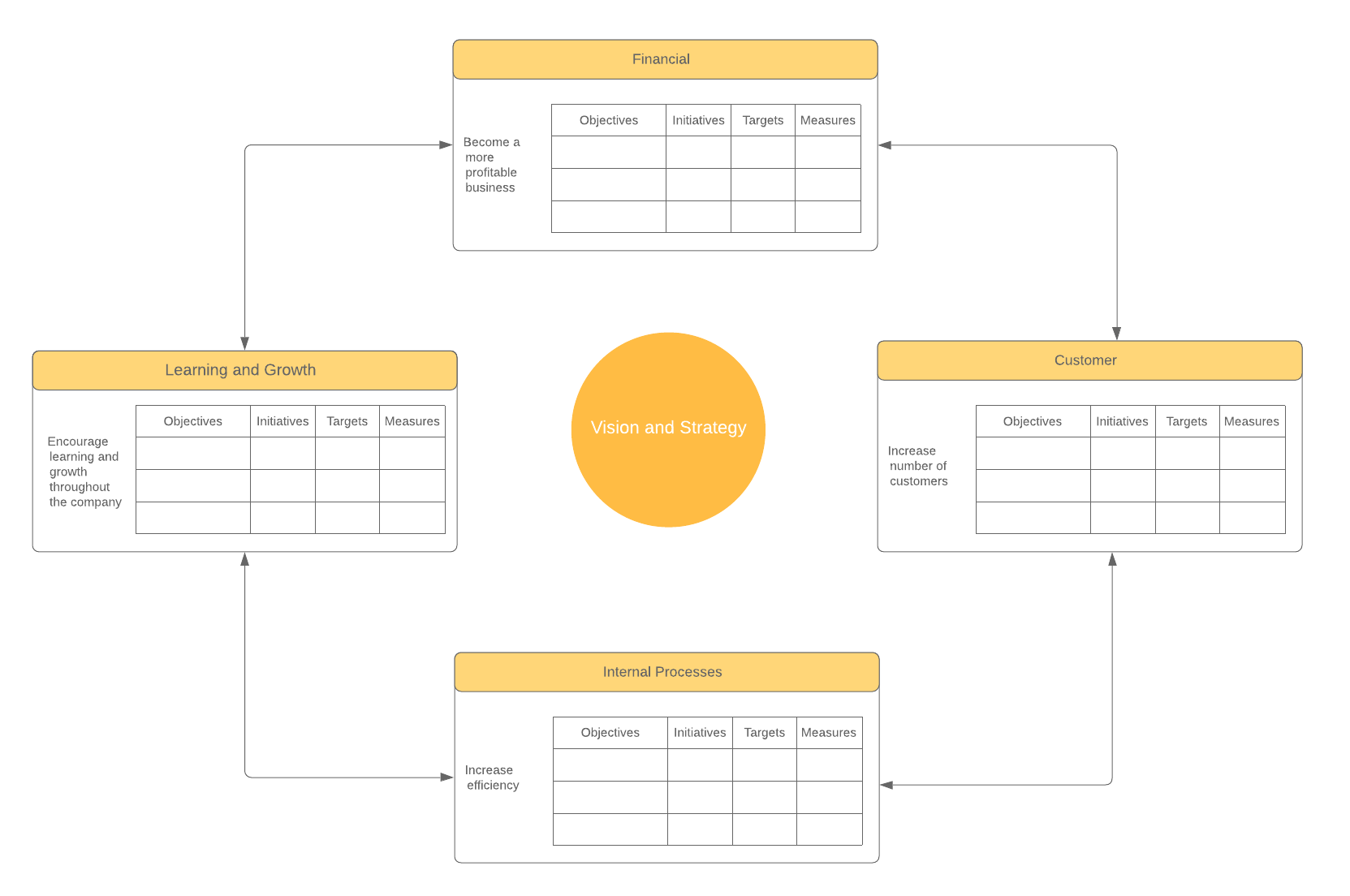
The balanced scorecard aims to balance the strategic goals and overall vision of an organization by identifying, measuring, and managing four main business perspectives:
- Customer
- Financial
- Internal business processes
- Learning and growth
Within these four pillars, leaders outline their strategic objectives for each business perspective and link those performance measures with a strategy map. The strategy map shows how each objective relates to one another so leaders can get a high-level view of their organization’s strategy at a glance.
Keep in mind that, while performance measurement is a component of the balanced scorecard, the BSC is first and foremost a management system.
By combining the four primary business perspectives, the BSC helps businesses and their leaders make better-informed decisions and lead with confidence.
Understanding the four perspectives
The balanced scorecard evaluates the health of your organization by considering four main perspectives. Each perspective focuses on a different part of the business to give leaders a comprehensive and nuanced understanding of the company’s performance.
Learning and growth
This perspective is also called “organizational capacity.” It looks at organizational performance through the lens of human capital, culture, technology, and infrastructure.
For instance, are your employees using your technology stack to execute tasks and manage processes? Does your organization provide adequate training and resources? What steps are you taking to remain competitive?
The learning and growth perspective considers how well information and knowledge are captured and implemented by employees to create a competitive advantage.
Internal business processes
The next perspective focuses on how well your internal processes are operating.
Are there gaps, delays, or bottlenecks in the pipeline that need to be addressed? How can you streamline your processes for greater efficiency and effectiveness? How quickly can your organization adapt to changing business needs or conditions?
Customer
The customer perspective asks “What is important to our customers and stakeholders?” This perspective focuses on finding new customers, building brand recognition and trust, and increasing customer satisfaction.
In other words, how well are you serving your customers and the stakeholders your organization was designed to serve?
Financial
The final piece of the puzzle is the organization’s financial state. Yes, this is the perspective too often over-emphasized in the past.
But, though finances are lagging indicators of past decisions, they are still an important part of any organization’s health and key to understanding overall performance and creating strategies for the future.